
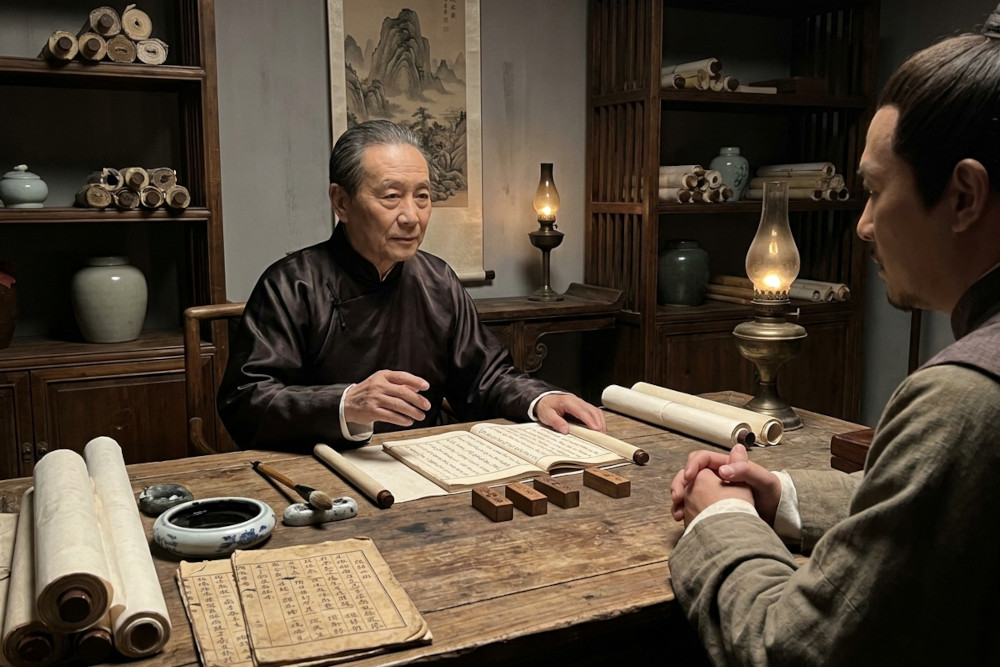
Throughout Chinese history, stories have been told of unusual people who seemed able to glimpse the hidden patterns of fate. Some served in imperial courts, advising emperors, ministers, and generals. Others lived among ordinary people, traveling from place to place and offering guidance through divination, astrology, or face reading.
Well-known figures such as Yuan Tiangang of the Tang Dynasty and Liu Bowen of the Ming Dynasty were remembered for their remarkably accurate predictions. Yet many lesser-known diviners also left behind accounts that reflected a traditional Chinese belief that human life is not random, and that events may unfold according to arrangements beyond ordinary sight.
Several such stories were recorded in historical notes and collections from the Ming Dynasty.
A Confucian scholar predicts the fate of officials
According to Yongzhuang Xiaopin, a collection of Ming Dynasty notes and anecdotes, there was once a Confucian scholar named Wang Qi from Tiantai. He studied at an official academy and was well-versed in astronomy, divination, and astrology. Later, after leaving school due to personal circumstances, he traveled widely and used his divination skills.
During the Chenghua reign of Emperor Xianzong of the Ming Dynasty, Wang Qi arrived in Jinling, today’s Nanjing. At the time, Wang Shu, who served as Minister of War in Nanjing and Deputy Imperial Censor, had recently been framed by others. Worried about his future, he asked Wang Qi to predict what would happen.
Wang Qi told him: “You will be removed from office, but three years later, you will be appointed again.”
As predicted, in 1486, Emperor Xianzong allowed Wang Shu to retire with an honorary title associated with the crown prince. After Emperor Zhu Youcheng ascended the throne, he accepted the recommendations of court officials and summoned Wang Shu back to serve as Minister of Personnel. Not long afterward, Wang Shu received another high honorary title.
On another occasion, a serious prisoner escaped from the Ministry of Justice. The official in charge asked Wang Qi to divine what had happened. Wang Qi said: “This man has been imprisoned five times. This time, he escaped because thieves broke in.”
He also predicted the date on which the prisoner would be recaptured. When events unfolded exactly as he had said, those who heard about it were astonished.
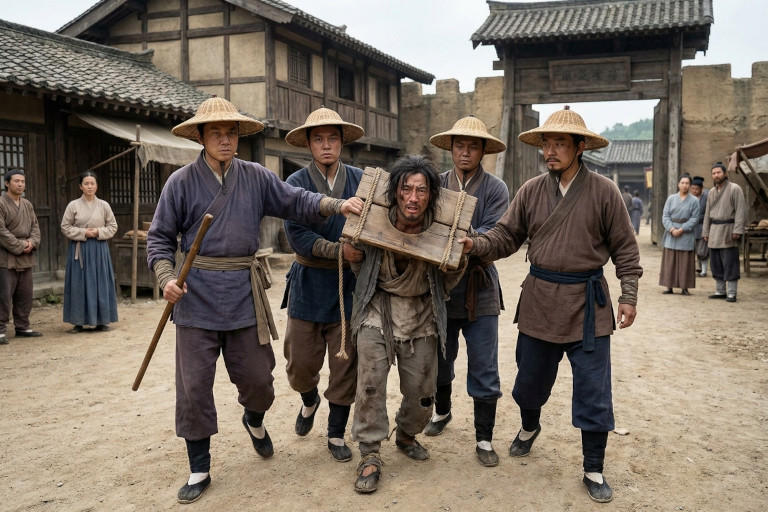
Wang Qi was also consulted by a military commander named Chen. Chen’s wife had died, and the family was preparing her body for burial when their daughter suddenly became ill. Distressed, Chen asked Wang Qi what was happening.
Wang Qi replied: “Not only will your daughter be safe, but your wife is not truly dead. You will also have two more sons. Even if you wish to proceed with the burial preparations, it would be best to wait until after noon.”
At noon, Chen’s wife indeed revived. Later, the couple had two more sons.
Another official, Wang Yingkui, asked about his career prospects. Wang Qi told him that because his temper was too fiery, if he served as an official in the south, fires would break out wherever he went.
Wang Yingkui was later transferred to Taizhou in Zhejiang Province. Just three months after he took office, a devastating fire broke out in the region, destroying nearly all the homes. Overcome by anger and distress, Wang Yingkui fell ill and died.
An old scholar predicts examination rankings
During the Jiajing and Longqing reigns of the Ming Dynasty, there was an elderly scholar named Cui Zijun. He was a relative of Jiao Hong, a celebrated scholar, top-ranking imperial examination graduate, and literary figure of the Ming Dynasty. Cui was skilled in divination, and many of his predictions were said to have come true.
He may have studied Plum Blossom Divination, a method associated with the Northern Song philosopher Shao Yong. This form of divination used natural signs and patterns to interpret events.
One day, a prefect named Jiao Jingchuan came to ask Cui about his ranking in the annual evaluation of officials. In ancient China, officials were regularly assessed on their performance, and the results could affect their careers.
After divining, Cui said: “If the results are announced on a certain day, you will be second. If they are announced later, you will be first.”
Soon afterward, the results were released, and Jiao Jingchuan was indeed ranked first. He later learned that he had originally been listed second, but had been moved to first place before the final announcement. Cui’s prediction had matched the situation precisely.
Another story involved Zhu Guozhen’s father, who later became a grand secretary of the Ming Dynasty. After taking the autumn imperial examination, Zhu’s father went to Cui’s home to ask about the outcome.
Cui happened to be seeing off a guest. When he returned, he said to Zhu’s father: “You came to ask about the examination, did you not? There is no need to divine it. I already know your result. You will pass this time, but your ranking will be low.”
When the results were posted, Zhu’s father had passed in 130th place, just as Cui had predicted.
He Chaoyong and the art of face reading
He Chaoyong, a native of Mianzhu in Sichuan Province, was said to have encountered an extraordinary person in his youth who taught him mysterious techniques. After that, his predictions based on face reading were said never to have failed.
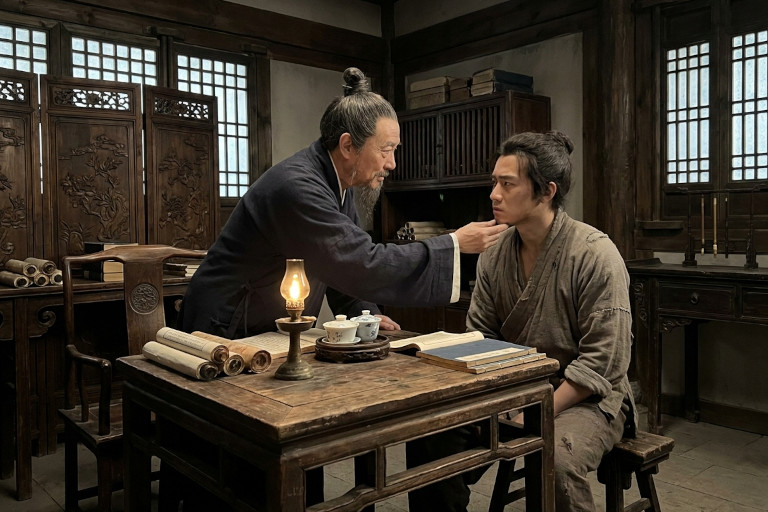
Once, an official was about to take up a post in Yunnan, and He Chaoyong was to accompany him. Before leaving, they said farewell to an official named Wen. Wen asked He whether he had any final advice before the journey.
He Chaoyong said: “You have much good fortune, so there is no need to worry. However, in three days, there will be a minor incident involving bloodshed near the prefecture’s border. Still, you need not be alarmed, because it will not involve this prefecture.”
Wen was startled, but somewhat reassured. Three days later, a conflict did break out among ethnic groups near the prefectural border, and weapons were used.
Later, while He Chaoyong was working as an aide in Jingdong, southern Yunnan suffered a severe drought. Chen Jianwu, the governor of Yunnan, was deeply worried and asked He to make a prediction.
But He said he needed to wait until Prefect Dong arrived before he could speak.
Chen found this strange and asked: “I govern an entire province. Am I not more important than a prefect?”
He replied that the drought affected only one prefecture in Yunnan, while Chen’s jurisdiction was much broader. Because of that, he could not make an accurate prediction based solely on observing Chen.
Chen then urged Prefect Dong to come quickly to the governor’s office. When Dong arrived, He observed him and said, “This is good news. On the 21st day of this month, during the xu hour, between 7 and 9 p.m., clouds will gather, and light rain will fall. Around midnight, thunder will rumble loudly. By dawn, rain will pour down, and it will not stop until three inches have fallen.”
On the date He had named, heavy rain indeed arrived.
Chen was deeply astonished and recommended He Chaoyong to Inspector Liu. When Liu met him, he said: “I do not particularly care for astrology or divination, but you may take a look at my son.”
After observing the son, He said: “Your son is highly learned and ranks among the successful scholars.”
When this was checked, it turned out to be exactly true.
Ancient stories of fate and hidden order
To modern readers, such accounts may sound mysterious or even unbelievable. Yet in traditional Chinese culture, stories like these were not simply meant to entertain. They reflected a deeper belief that Heaven, human character, and worldly events were connected in ways ordinary people could not always see.
Whether one views them as history, moral teaching, or folklore, these stories show how past generations tried to understand fate, virtue, and the unseen order behind human life.
Translated by Joseph Wu
Follow us on X, Facebook, or Pinterest
