
Editor’s Note: This is the second and final part of Dr. Li Feng’s personal account. Like Part 1, it presents her personal recollections, lifestyle choices, and health beliefs. Some of her views — particularly those regarding exercise, oxygen, diet, and emotional states in relation to cancer — reflect her individual perspective and are not supported by current medical consensus. This article is published as a historical personal narrative, not as medical guidance. Readers should consult a qualified healthcare professional before making any changes to their health regimen.
Learning to move: Walking and physical recovery
For a long time, exercise was the last thing I wanted to do. After undergoing cancer treatments, my body was extremely weak, my blood circulation was poor, and my hands and feet were perpetually icy. The simple act of walking along farm roads on small hills felt less like healing and more like an ordeal.
If it had been left entirely up to me, I likely would have stayed indoors. But my husband insisted. Every Sunday morning, he prepared our backpacks, water bottles, and simple food, pulled me out of bed, and brought me out the door.
At first, I complained constantly. If the sun was shining, I resisted walking because exposure often made my skin itch. If it rained, I worried that I would catch a cold. If the wind blew, my poor circulation made me colder rather than warmer as I walked.
Despite my resistance, my husband persisted, and over time, the benefits began to accumulate quietly. My skin sensitivity gradually vanished, wind and rain no longer bothered me, and my stamina grew. Distances that had once brought me to tears became manageable.
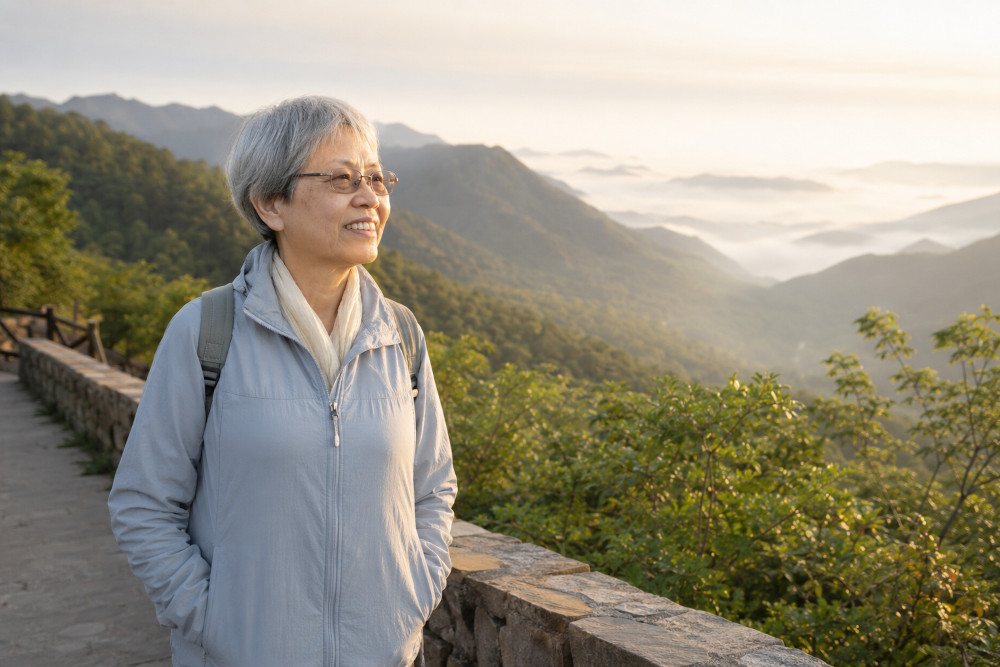
Eventually, walking 20 kilometers a day became routine, and I once set a personal record of 40 kilometers. After two years of gradual preparation, I even summited Mount Jade (Yushan) to test my physical endurance — a milestone I passed with deep gratitude.
In later years, I changed my daily schedule to prioritize outdoor activity. Every morning, I spent two hours hiking in the mountains, breathing in the fresh forest air before returning home to shower and start my workday. People around me noticed that I looked healthier and more energetic, and I found that regular movement in nature had become essential to my well-being.
Oxygen and the cellular environment
My commitment to outdoor walking was also influenced by my background in pathology and my observations of cellular behavior.
In laboratory cell cultures, I had observed that when oxygen levels were increased, cancer cells struggled to thrive, whereas elevated carbon dioxide levels encouraged their growth. From these observations, I developed a personal theory: when we subject our bodies to conditions that create internal oxygen deprivation, cells may adapt in unhealthy ways. Conversely, providing the body with ample oxygen through deep breathing and exercise might help restore a healthier internal environment.
Whenever I examined cells under the microscope and saw signs that cells appeared exhausted or oxygen-deprived, I would pass along a simple piece of advice based on my own experience: “Your cells look tired. Go spend time walking in the mountains.”
For those who chose to incorporate regular outdoor walking into their routines, the physical improvements were often noticeable. For me, walking was not a magic cure, but a fundamental way to support my body’s natural vitality.
Discipline, yoga, and the daily routine
In addition to walking, I devoted considerable time over the years to practicing yoga, qigong, and meditation.
At first, these practices yielded no visible results. Over time, however, I noticed subtle shifts in my agility and overall health. I came to believe that yoga required two essential elements to be effective: a slow pace and thorough warm-up exercises. I spent two years simply learning proper warm-up movements and an hour mastering basic relaxation postures like the “corpse pose” (Savasana). Later, I developed a personal routine that combined traditional yoga movements with mindful bowing, integrating physical conditioning with mental quietude.
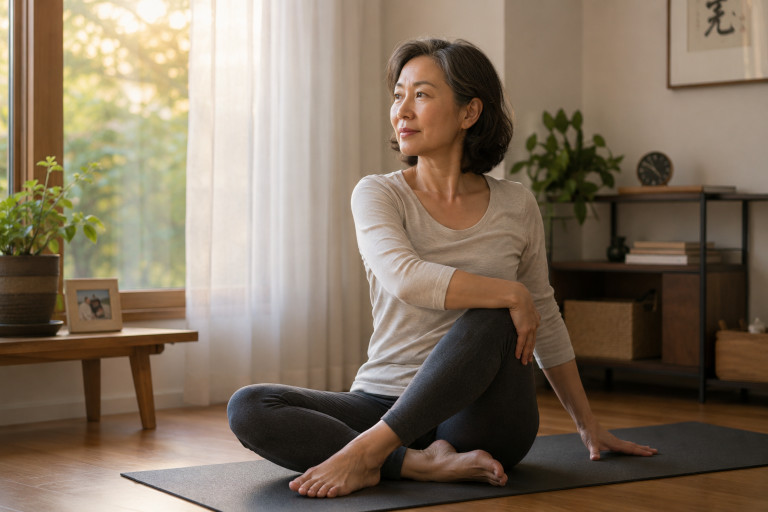
Eventually, my daily routine involved nearly four hours of exercise and practice. I woke up around three or four in the morning, practiced yoga on an empty stomach for over two hours, and then meditated for an hour before heading outdoors.
People often expressed disbelief when they heard I spent four hours a day exercising. But to me, the trade-off was simple:
“If spending four hours on exercise makes the remaining twenty hours of the day comfortable and fulfilling, it is a worthwhile investment. The alternative — spending twenty-four hours a day feeling weak and uncomfortable — is far more difficult.”
Changing my emotional habits
As important as diet and exercise were, I came to realize that physical changes alone were incomplete. Overcoming illness required an equally thorough transformation of my emotional habits and mental outlook. Over the decades, four psychological practices became central to my life:
1. Learning to laugh
I believed that when a person laughs heartily, the body’s tension releases and the cells relax. Early on, because I did not always feel like laughing, I forced myself to pull my mouth into a smile. Over time, my internal state aligned with my outward expression, and cheerful feelings became more natural.
I remembered a deeply distressed patient who once visited my office. Seeing her heavy mood, I asked her young daughter in a whisper: “Is your mother ticklish?” When the girl nodded, I suggested: “Whenever your mother is lying in bed feeling down, try tickling her until she laughs.” Incorporating moments of lightness helped ease the heavy atmosphere that so often accompanies serious illness.
2. Managing anger
Learning not to get angry was a much harder lesson. By nature, I was straightforward and quick to react to unfairness. But eventually, I adopted a new perspective: anger is punishing myself for someone else’s mistake.
Learning to manage my temper took four or five years of conscious effort, progressing through distinct stages:
- Initial stage: Reacting with immediate anger, followed by regret.
- Secondary stage: Feeling anger rise, but physically removing myself from the situation to cool down.
- Intermediate stage: Remaining present while holding back temper, internally practicing empathy for the other person.
- Final stage: Observing unreasonable behavior clearly while maintaining a calm, genuine smile.
3. Maintaining a positive mindset
My emotional state directly influenced my experience of illness. In the early stages after my diagnosis, continuous setbacks and fear left me with little confidence, and treatments seemed ineffective. Later, as I regained a sense of purpose and hope, my health gradually stabilized — even during periods when I was not receiving active medical treatment.
When anxious individuals came to speak with me about their diagnoses, I sometimes offered an unexpected perspective: “Congratulations.”
When they looked at me with confusion, I would explain: “If you had not fallen ill, would you ever have examined your lifestyle, adjusted your diet, started exercising, or learned to slow down? From today onward, you have an opportunity to build a simpler, healthier life.”
If they left feeling lighter, I felt I had shared something useful: the lesson that a serious health setback can serve as a catalyst for living more intentionally.
To help protect my time after work, my husband even disconnected our home telephone line so that calls would not interfere with my exercise and rest.
4. Practicing true relaxation
True relaxation begins in the mind, but achieving it often requires letting go of conventional pursuits — prestige, material gain, and unnecessary obligations.
I started this process through physical decluttering. I went through my home and cleared out drawers, immediately giving away or discarding items I had not used in a long time. I simplified my wardrobe and reduced my social commitments. As my surroundings and relationships became simpler and less demanding, my mind became lighter, and my physical body followed suit.
The choice to change
When doctors told me decades ago that my prognosis was poor, I could not have anticipated that I would gain more than thirty additional years of productive life.
Over the years, as I met and spoke with many people facing serious illnesses, I observed that those who maintained their health and vitality for long periods shared a common trait: they were willing to reflect honestly on their lives and to discipline themselves to change how they lived.
The core principle I arrived at through my own journey was straightforward:
“The more thoroughly you reflect and adjust your habits, the greater the opportunity for your body to find balance.”
Health is not governed solely by external interventions; it is deeply connected to how we treat ourselves every day. By listening to the body’s signals, reducing unnecessary strain, nourishing ourselves thoughtfully, and maintaining a peaceful mind, we take an active role in our own well-being — a lesson that remains valuable through every stage of life.
Translated by Eva
Follow us on X, Facebook, or Pinterest
